681 459 0519

Bookkeeping Cleanup: How to Fix Messy Books

From corner stores to fine dining establishments, adequate bookkeeping is essential for every operator in the food service industry. Unfortunately, it's all too easy to neglect your books and lose control over your financial records–especially if you don’t have access to a reliable accounting team.
If this sounds familiar, we’re here to help. Throughout this article, we’ll share some tips on how to avoid common pitfalls, where to get assistance, and how to get your bookkeeping back on track.
Common Bookkeeping Mistakes
As the owner of a business, it’s easy to make a lot of minor mistakes while recording transactions into books of accounts. In these situations, it often takes a lot of cleaning up to settle the books and make sure everything is properly documented, recorded, and accounted for.
The question is, how do businesses get to the point where their books are in need of such a big clean up? Let’s explore.
Missing Transactions
Sales, purchases, payments, and receipts need to be recorded accurately. When transactions are missed during a busy service or forgotten at the end of the day, the books no longer reflect the restaurant's actual financial activity.
Even small omissions add up over weeks or months, making it harder to track revenue, monitor expenses, and prepare accurate financial reports.
Unreconciled Accounts
Bank statements and accounting records need to match, but discrepancies often go unexplained when reconciliations fall behind. A deposit might be missing, a payment might appear twice, or a transaction might have been entered for the wrong amount.
Regular reconciliation helps identify these errors while the original transactions are still relatively easy to trace.
Misclassified Expenses
Recording expenses under the wrong categories affects the accuracy of financial reports. A restaurant might classify equipment purchases as ordinary operating expenses or record food supplies under an unsuitable account.
These mistakes distort expense totals and make it harder to assess food costs, labor expenses, and overall profitability. Consistent categorization gives restaurant owners a clearer picture of where their money goes.
Overlooked Invoices
Supplier invoices sometimes go unrecorded, particularly when bills arrive by email, through ordering platforms, or alongside deliveries. An invoice that never reaches the books creates an incomplete picture of outstanding liabilities and upcoming payments.
Over time, missed bills may lead to late fees, strained supplier relationships, and cash flow problems. Keeping invoices organized and reviewing accounts payable regularly helps prevent these issues.
Inaccurate Payroll Records
Restaurant payroll involves employee hours, overtime, tips, payroll payments, and other wage-related expenses. Errors in recording these transactions distort labor costs and leave gaps in the financial records. Staff turnover, changing rosters, and inconsistent recordkeeping add to the difficulty.
Keeping payroll information current and checking it against payroll reports helps maintain accurate expense records and supports tax reporting.
Neglected Month-End Adjustments
Some accounting entries need attention at the end of each month to reflect the restaurant's financial position accurately. Depreciation, prepaid expenses, and accrued costs are common examples. If these adjustments are missed, expenses and balances may appear in the wrong period, affecting monthly profit figures and management reports.
Regular month-end reviews help keep the accounts accurate and make financial performance easier to assess.

Falling behind? Constantly on the back foot? Let Enlaiven Accounting’s qualified professionals get your bookkeeping back on track. Contact us online or read our brochure to find out how!
Adapting to Modern Challenges
Consumer Habits and Behaviour
Customers are becoming more selective about dining out, choosing meals, and spending money. Promotions, loyalty rewards, and tighter budgets influence what people order and how much they spend.
Accurate sales records help restaurant owners track menu performance, compare sales periods, and measure the effect of discounts. Recording complimentary items and promotions correctly also helps explain changes in revenue and average spending.
Staffing and Payroll
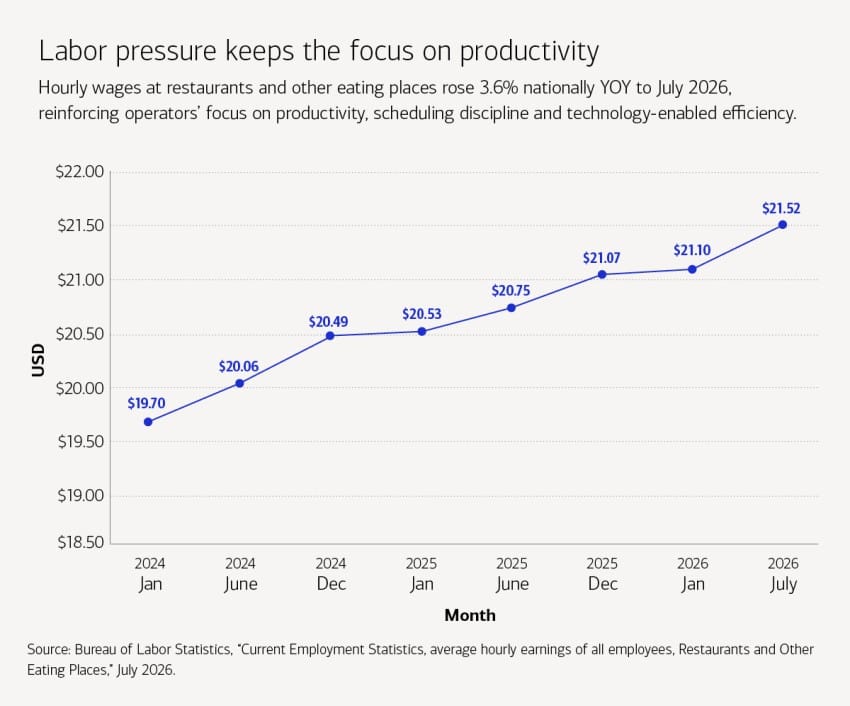
As you can see in the graph below, average hourly wages at restaurants and other eating places rose from $19.70 in January 2024 to $21.52 in July 2026, with a 3.6% year-over-year increase. Rising wages put added pressure on restaurant owners to manage labor costs and improve productivity.
Accurate payroll records help owners to track employee hours, overtime, tips, and wage expenses against sales. Well organized bookkeeping makes it easier to spot rising labor costs and understand their effect on profitability. Missing payroll entries or incorrectly recorded payments also distorts financial reports and creates extra work during month-end reconciliation.
Delivery Apps
Third-party delivery platforms have undoubtedly changed the game. In addition to the impact on consumer habits, they also represent another challenge on the accounting side.
They’ve introduced extra transactions through commissions, service fees, refunds, and promotional deductions. Therefore, the amount deposited into the restaurant's bank account might differ significantly from the original order total.
Recording the payout as a single deposit leaves sales and expenses unclear. Instead, restaurant owners should break down transactions from each delivery platform and the costs associated with those orders.
How Enlaiven Accounting Can Help
At Enlaiven Accounting, we provide bookkeeping and accounting services for businesses in the food sector that need help bringing their financial records up to date.
Our one-time cleanup and catch-up service is a great way to address incomplete records and bookkeeping errors, while our ongoing support to keep transactions well organized moving forward.
Quality Service
We focus on accurate transaction recording, account reconciliation, and reliable financial reporting. Our services cover day-to-day transactions, month-end adjustments, and the preparation of monthly management accounts.
Cost-Effective Solutions
We offer affordable bookkeeping and accounting support, including one-time cleanup work for businesses that need to get their books back in order without committing to ongoing services.
No Physical Boundaries
Our remote service model allows us to work with businesses across the United States without requiring an on-site accounting team. Our time zone advantage also helps keep work moving outside your regular business hours.
Scalability and Flexibility
We offer support ranging from one-time cleanup and catch-up work to ongoing end-to-end bookkeeping and accounting. Our services also include accounts payable and receivable management, payroll processing, data migration, and year-end finalization with work paper preparation.
With no physical limitations whatsoever, we offer flexible support for business owners in California, Illinois, New Jersey, and everywhere in between.
Ready to get your books back on track? Visit our bookkeeping and accounting services page to learn more or schedule a free 30-minute session.