
 681 459 0519

Restaurant Accounting: A Practical Guide for Owners

Running a restaurant takes a lot of time, effort, and resources. In order to achieve sustainable success in this industry, your accounting must be well organized and structured.
Why? As you probably already know, restaurant accounting is both unique and complicated. For that reason, we’ve created this practical guide with all of the information you need to know. Hopefully this will be a helpful starting point for knowing how the process works.
Restaurant Accounting 101: What You Need to Consider
During the 2024-25 financial year, bankruptcy wiped out a large number of full service food locations across the country (Source: Restaurant Business Online). Even household names like Chili’s, Denny’s, and Applebee’s closed multiple locations. Much like the rest of the industry, even these large-scale companies were feeling the crunch.
Current industry trends also highlight the importance of proper restaurant accounting, regardless of how big or small your business may be. From food costs, payroll, supplier bills, and other expenses, a whole number of factors can affect your bottom line, and sales figures alone rarely tell the whole story.
Accurate bookkeeping and financial reporting help restaurant owners understand where their money goes, monitor cash flow, and make informed business decisions. Here are the main areas to focus on.
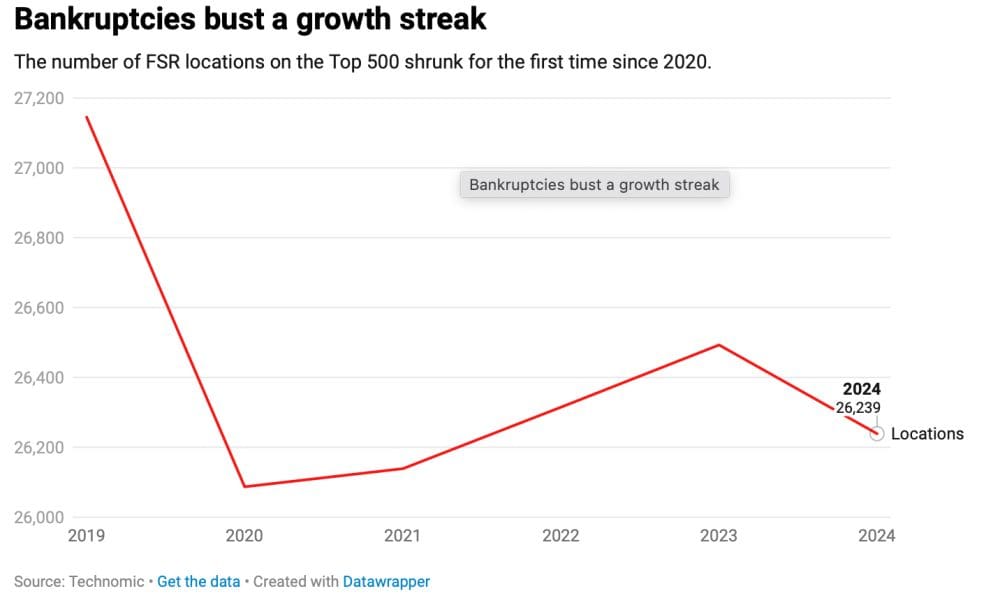
Source: Restaurant Business Online
Tracking Sales and Daily Revenue
Dine-in orders, takeout, delivery apps, catering, and gift cards all contribute to restaurant revenue. Keeping sales records accurate means reconciling POS reports with payment processor statements and bank deposits.
Tips and service charges need careful tracking as well, particularly if and when payroll and reporting obligations are involved. Regular reconciliation helps identify discrepancies before they turn into larger accounting problems.
Managing Food Costs and Inventory
Rising grocery prices, spoilage, and inconsistent stock control all put pressure on restaurant profitability. Tracking purchases and inventory is one way owners can understand where costs might be increasing and which menu items consistently deliver strong margins.
It’s essential to keep track of:
- Record purchases by supplier and product category
- Monitor inventory, waste, and spoilage
- Review ingredient costs against menu prices
- Compare food and beverage expenses over time
- Supplier price increases or adjustments
Keeping Payroll and Tip Records Straight
Restaurant payroll involves changing shifts, overtime, tips, deductions, benefits, and frequent staff turnover. Mistakes create extra administrative work and may lead to compliance issues.
Accurate payroll records help keep wages, applicable taxes, and deductions in order while giving owners a clearer picture of labor costs. Federal, state, and local requirements also need consideration, particularly around overtime and tip reporting.
Staying on Top of Accounts Payable and Receivable
Late supplier payments may lead to fees and strained vendor relationships. Accounts payable management keeps invoices organized, tracks payment deadlines, and helps bills get paid on time.
Accounts receivable management focuses on collecting outstanding payments. Restaurants offering catering, private events, or corporate dining services benefit from clear records and timely follow-ups to reduce delinquency and improve cash flow.
Understanding Cash Flow and Monthly Performance
Profitability and liquidity tell different stories. A restaurant might be profitable on paper but still struggle to cover payroll, rent, or supplier invoices when payments fall due.
Monthly management accounts bring together key financial information, helping owners review profitability, liquidity, and spending trends. If revenue stays steady while profits fall, the figures may point to rising food costs, labor expenses, or other overheads.
Handling Taxes and Year-End Accounting
Restaurant owners need organized records for applicable federal, state, and local tax obligations, including sales tax, payroll taxes, and tip reporting.
Keeping the books current throughout the year makes tax preparation and year-end finalization less stressful. Properly prepared work papers also give tax professionals the financial information they need to complete their work.
Managing the Books Across Multiple Locations
Restaurant groups and franchise operators face additional reporting demands. Each location has its own sales, staffing, inventory, and expenses, yet owners still need a clear view of the entire business.
Consistent bookkeeping and financial reporting help compare locations, identify differences in operating costs, and review overall performance. Reliable figures also support decisions about expansion and resource allocation.
Benefits of Using an External Restaurant Accounting Team
Running a restaurant already involves enough moving parts. Managing invoices, reconciling transactions, and preparing financial reports after a full day of service adds another workload.
An external accounting team takes these financial tasks off your hands, with support ranging from everyday bookkeeping to comprehensive accounting services.
Spending More Time Running Your Restaurant
Time spent sorting receipts and reconciling accounts is time away from staff, customers, and daily operations. Outsourcing bookkeeping and accounting frees up more time for the work that keeps your restaurant running.
Access Restaurant Accounting Expertise
Restaurant finances involve industry-specific challenges, including payroll, tip reporting, vendor payments, and food costs. Experienced accounting professionals help maintain accurate financial records and prepare reports that support better decisions.
Luckily, there is assistance available. Our team offers simple and affordable restaurant-specific accounting services, from everyday bookkeeping to complex financial reporting. Best of all, no face-to-face appointments are required. Visit our about us page to learn more!
Benefit From Remote Accounting Support
Remote bookkeeping offers support without requiring an on-site accounting employee. An external team works on agreed tasks remotely, with the flexibility to suit your restaurant's needs.
With remote support, it’s possible to get accounting assistance in multiple time zones. Our capabilities allow us to manage the accounting side of the business while you're either focused on service or off the clock.
Keep Accounting Costs Manageable
Hiring in-house accounting staff involves salaries and other employment costs. Outsourcing offers another option, with services selected according to your workload and budget.
A single-location diner may need regular bookkeeping and payroll support, while a growing restaurant group may require broader financial reporting and end-to-end accounting services.
Maintain Continuity Through Staff Turnover
Frequent staffing changes add pressure to payroll and administrative processes. External accounting support provides continuity for agreed tasks, helping keep records current when internal responsibilities shift.
Get More From Your Financial Reports
Accurate bookkeeping is the starting point. Monthly management accounts provide a clearer picture of profitability, liquidity, and other key financials, helping owners understand performance rather than simply recording transactions.
At Enlaiven Accounting, we help prepare and analyze monthly management accounts so restaurant owners have useful financial information to guide their decisions.
Scale Your Accounting as the Business Grows
Opening another location adds transactions, suppliers, employees, and reporting requirements. Flexible accounting support helps businesses manage the additional workload without having to build every function internally.
Catch Up on Overdue Bookkeeping
If your books have fallen behind, a one-time cleanup or catch-up service helps bring financial records up to date. Data migration support is useful when moving to a new accounting system, helping transfer records into the new setup.
We offer both of these services, alongside ongoing bookkeeping and accounting support. Contact us now to arrange a consultation!
Need end-to-end restaurant accounting in California? Looking for bookkeepers in Michigan? Can’t find a tax accountant in Florida? At Enlaiven, we have qualified professionals ready to assist in a wide range of different areas.

Let Enlaiven Accounting Handle the Numbers
Restaurant accounting should give you a clearer understanding of your finances, not become another burden at the end of a busy day. Whether you’re trying to scale the business or simply get more clarity around your finances, we’re just the team to call.
At Enlaiven Accounting, our team provides bookkeeping, accounts payable and receivable management, payroll services, monthly management accounts, and year-end finalization and work paper preparation. We offer flexible support for restaurants that need a one-time cleanup or ongoing accounting assistance.
Visit our restaurant accounting page to learn more and book a free 30-minute session.


